

Savannah Real Estate Market Update: What Buyers and Sellers Need to Know This Fall 2026
Mortgage rates are back near 7%. Buyers have more negotiating room.
So what does that actually mean if you're thinking about buying or selling in the Savannah area?
Here is what matters right now.
Are Mortgage Rates Rising Again in September 2026?
Yes.
According to Freddie Mac, the average 30-year fixed mortgage rate reached 6.95% in mid-September 2026. That was up from 6.76% one week earlier and 6.66% in late August. A year earlier, the average rate was 6.26%.
The bigger issue isn't just where rates are today. It's what could keep them elevated.
Inflation remains a problem. In September, Federal Reserve policymakers projected 2026 PCE inflation at 3.7%, slightly higher than their 3.6% projection in June. The Fed also raised its benchmark federal funds rate by a quarter percentage point in mid-September.
Energy prices add another layer of uncertainty. If higher energy costs continue feeding into transportation, manufacturing and consumer prices, inflation could remain harder to bring down. That makes it difficult to assume mortgage rates are about to make a sustained move lower.
The Fed's September projections also show that policymakers have very different views about where rates should go from here. Another rate increase this year is not guaranteed, but additional tightening cannot simply be ruled out either.
Source: Freddie Mac Primary Mortgage Market Survey and Federal Reserve September 2026 economic projections.
What does this mean for Savannah home buyers?
Waiting indefinitely for mortgage rates to fall isn't much of a buying strategy.
A better approach is to know what you can comfortably afford at today's payment, get an updated pre-approval and compare financing options from multiple lenders.
Buyers should also look beyond the purchase price when negotiating.
A seller-paid closing-cost credit or mortgage-rate buydown may reduce your monthly payment more than a modest reduction in the sales price.
The opportunity isn't necessarily getting the lowest rate. It may be finding the right combination of price, financing and seller concessions.
Do Savannah Home Buyers Have More Negotiating Power?
Nationally, buyers have more options than they did during the extreme seller's markets of a few years ago.
The National Association of REALTORS reported that existing-home sales fell to a seasonally adjusted annual rate of 3.98 million in August 2026. At the same time, housing inventory increased to 1.62 million homes, representing 4.9 months of supply.
That was the highest months-of-supply figure in more than a decade.
NAR specifically noted that the increase in inventory is giving buyers better opportunities to negotiate.
But there is an important local catch:
Savannah is not one real estate market.
A waterfront property on Wilmington Island or Isle of Hope does not necessarily behave like new construction near Pooler.
A historic home downtown is different from a suburban home in Richmond Hill.
A property in Effingham County affected by growth along the I-16 corridor has a different set of market forces than a home in an established Savannah neighborhood.
That's why national housing headlines should be treated as context, not as a pricing strategy.
What should Savannah buyers negotiate in today's market?
Depending on the property and competition, buyers may have opportunities to negotiate price, closing costs, repairs, rate-buydown assistance, or other concessions.
The key is knowing how much leverage exists for that particular property.
A home that has been sitting on the market is a very different negotiation from a well-priced home that just listed and already has multiple interested buyers.
Did Savannah Approve the New Duplex, Townhome and Housing Zoning Changes?
No.
Savannah City Council rejected the latest Housing Toolkit zoning proposal in September 2026 in a 5-4 vote.
The proposal was designed to expand where different housing types could be developed in the city. The Planning Commission had previously recommended approval, but City Council ultimately did not adopt the changes.
Why does Savannah's Housing Toolkit decision matter to property buyers and investors?
Because you should never buy a property based on what you hope the zoning will eventually allow.
If you're considering a Savannah property because you want to add another residential unit, increase density, redevelop the property, or pursue a different use, verify the property's current zoning and development standards before making assumptions about its potential.
The City of Savannah maintains a zoning map and permitted-use information that property owners and buyers can use to investigate what is currently allowed.
Proposed zoning changes can create opportunity.
Until they're actually adopted, they're still proposals.
What Is Savannah's New Stormwater Utility Fee?
Savannah's new stormwater utility fee began appearing on utility bills in September 2026.
Unlike property taxes, the fee isn't based simply on the market value of your home. It is tied to the amount of impervious or hard surface on a property, such as roofs, driveways, and parking areas, because those surfaces contribute to stormwater runoff.
Most Savannah homes fall into the city's Tier 2 category and will see a charge of about $4.75 per month.
The city also has provisions for qualifying stormwater-management practices that may reduce certain property owners' fees.
What should Savannah home buyers include in their housing budget?
Your mortgage payment is only part of the cost of owning a home.
Buyers should evaluate property taxes, homeowners insurance, flood insurance when applicable, HOA or community fees, utilities, stormwater fees, maintenance costs, and potential insurance changes over time.
That is especially important in Coastal Georgia, where flood zones, insurance, and property-specific characteristics can materially change the real monthly cost of owning two similarly priced homes.
Are Large Data Centers Coming to Savannah?
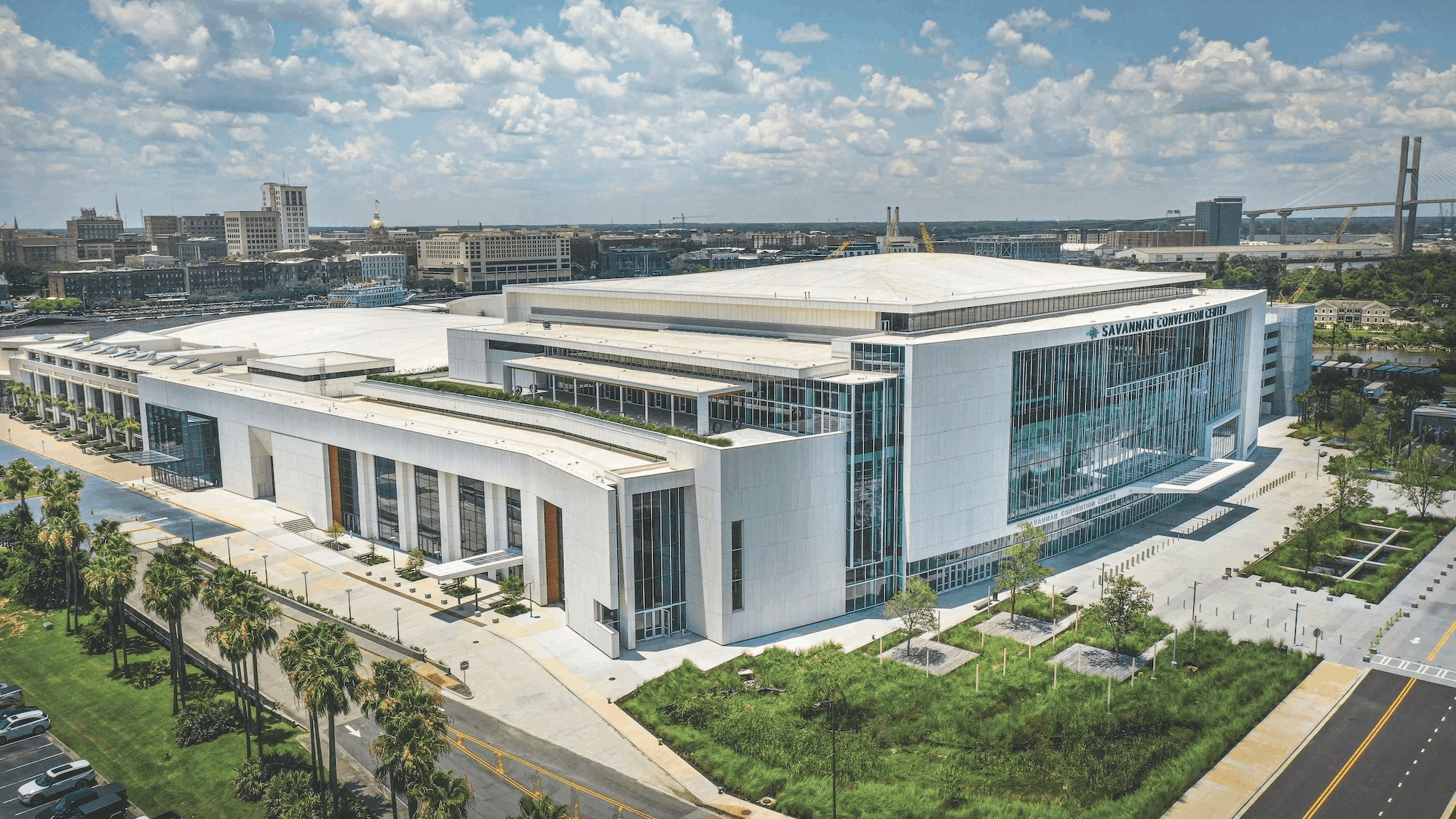
Not immediately inside Savannah city limits.
Savannah approved a 155-day moratorium on new large-scale data centers while city officials study their potential impact on infrastructure, utilities, zoning and surrounding communities.
The moratorium applies to large-scale facilities with an electrical capacity of 10 megawatts or greater and also addresses the conversion of very large warehouse and industrial buildings to data-center use.That doesn't mean the data-center story has disappeared from Coastal Georgia.
Far from it.
Will the OpenAI Data Center (Project Camellia) Affect Effingham County Real Estate?
Project Camellia is OpenAI's planned data center campus in Effingham County, and it could become one of the largest economic development projects the area has ever seen.
OpenAI says the project will be built in phases, with additional electrical capacity coming online between 2028 and 2032. In plain English, this is a massive project that will grow over several years, not a data center that suddenly opens at full size overnight.
Effingham County says Project Camellia represents at least $20 billion in capital investment and is expected to create approximately 400 long-term jobs. The development is currently planned in five phases.
That's an enormous investment, but what does it actually mean for Effingham County homeowners and real estate?
Will the OpenAI Data Center Make Effingham County Home Prices Rise?
Nobody can responsibly guarantee that.
Large economic development projects can bring jobs, construction activity, infrastructure investment and additional demand for housing. Those factors can be positive for a growing real estate market.
But there is another side to the story.
Properties closest to a large data center could face concerns about construction, noise, traffic, infrastructure, power demand and how the development affects the surrounding area and quality of life.
That's why I wouldn't assume Project Camellia will automatically raise or lower home values across Effingham County.
The impact could be very different depending on the neighborhood, the property's distance from the project and how the surrounding area develops over the next several years.
Real estate is local, and sometimes it's extremely local.
For buyers, sellers and homeowners, Project Camellia gives us another major reason to watch the Savannah-to-Effingham growth corridor closely as this project moves forward.
How Is Major Infrastructure Investment Affecting Savannah's Long-Term Growth?
One of the most important real estate stories in Savannah isn't a single subdivision or employer.
It's the amount of infrastructure being built around the region.
Port of Savannah and Ocean Terminal
The Georgia Ports Authority is investing nearly $1.6 billion in the renovation of Ocean Terminal.
As of June 2026, the project was approximately 55% complete. When finished, annual container capacity at Ocean Terminal is expected to increase from roughly 200,000 twenty-foot equivalent units to 1.75 million.
That's a major expansion of one of the economic engines supporting Savannah and Coastal Georgia.
Savannah/Hilton Head International Airport
The airport is expanding its terminal concourse with four additional gates, along with additional seating, restrooms, food and beverage options and commercial space.
The construction contract approved for the concourse expansion was approximately $26.8 million.
Savannah's Canal District
The area surrounding Enmarket Arena continues to be part of a much larger redevelopment and planning effort.
The Canal District Master Plan envisions housing, businesses, improved transportation, trails, public spaces and other development while attempting to protect the character of surrounding West Savannah neighborhoods.
These projects matter because infrastructure, employment and private investment influence where people live, commute and spend money.
But they should not be treated as a guarantee of short-term home-price appreciation.
Long-term economic development and next year's home value are not the same thing.
Is Fall 2026 a Good Time to Buy a Home in Savannah?

There isn't one answer for every buyer.
Higher mortgage rates have made affordability harder. At the same time, increased inventory and slower sales nationally have created negotiating opportunities that buyers didn't have when homes were routinely attracting intense competition.
That creates an interesting tradeoff.
You may pay a higher mortgage rate today, but depending on the property, you may have more ability to negotiate price, repairs, closing costs or financing assistance.
The right question isn't simply: "Is this a good market?"
It's: "Does this particular home, at this price and this monthly payment, make sense for me?"
That's a much better way to make a real estate decision.
Should Savannah Home Sellers Offer Buyer Incentives?
In some cases, yes.
Today's buyer is extremely sensitive to monthly payment.
That means sellers should think beyond the list price.
Depending on the home and the competitive landscape, a closing-cost contribution or rate-buydown incentive may make the property more attractive without automatically resorting to a large price reduction.
But incentives aren't a substitute for correct pricing.
If the house is overpriced for its neighborhood and condition, creative financing won't fix the underlying problem.
Sellers need to understand the competition buyers are seeing right now, not what the neighbor's house sold for during a different market.
What Should Real Estate Investors Watch in Savannah Right Now?
Three things deserve particular attention: zoning, infrastructure, and carrying costs.
Don't assume a property can be converted, subdivided or intensified without verifying current zoning.
Don't assume a major nearby development automatically guarantees appreciation.
And don't evaluate an investment using only the purchase price and expected rent.
Insurance, flood exposure, taxes, utilities, maintenance, financing and changing local fees all affect the numbers.
The deal needs to work based on what you can verify today.
Future upside should be the bonus, not the entire business plan.
The Bottom Line on Savannah Real Estate in Fall 2026
Savannah and the surrounding Coastal Georgia region continue to attract significant infrastructure and private investment.
The Port of Savannah is expanding. Effingham County is preparing for a massive data-center investment. The airport is adding capacity. The Canal District continues to move through its redevelopment process.
At the same time, today's housing market presents very real challenges.
Mortgage rates are near 7%. Inflation remains elevated. Affordability matters. Buyers are more payment-conscious, and local zoning and ownership costs are changing.
That combination makes local knowledge more important, not less.
Because Savannah is not one market.
Downtown Savannah isn't Wilmington Island.
Wilmington Island isn't Pooler.
Pooler isn't Richmond Hill.
Richmond Hill isn't Effingham County.
And a national real estate headline can't tell you what is happening with the particular property you're considering.
If you're thinking about buying, selling or investing in the Savannah area, Team Yannett Real Estate Advisors can help you evaluate the numbers, neighborhood and current market conditions before you make the move.
Message "PLAN" to start with a strategy built around today's Savannah market.
Categories
- All Blogs (98)
- 31302 (1)
- Bloomingdale (1)
- Buyer Tips (1)
- Georgia Homes (2)
- Georgia Listings (2)
- Georgia Real Estate News (2)
- Home Buying 101 (1)
- Isle of Hope (2)
- Local Market Data (2)
- Making A Difference (5)
- Monthly Newsletter (4)
- Neighborhood Fun (14)
- Neighborhood Spotlight (1)
- Pricing & Negotiation (1)
- Real Estate Edutainment (55)
- Savannah Mortgage Rates (1)
- Savannah Real Estate (2)
- Seasonal Market Trends (1)
- Waterfront Homes (2)
Recent Posts





GET MORE INFORMATION